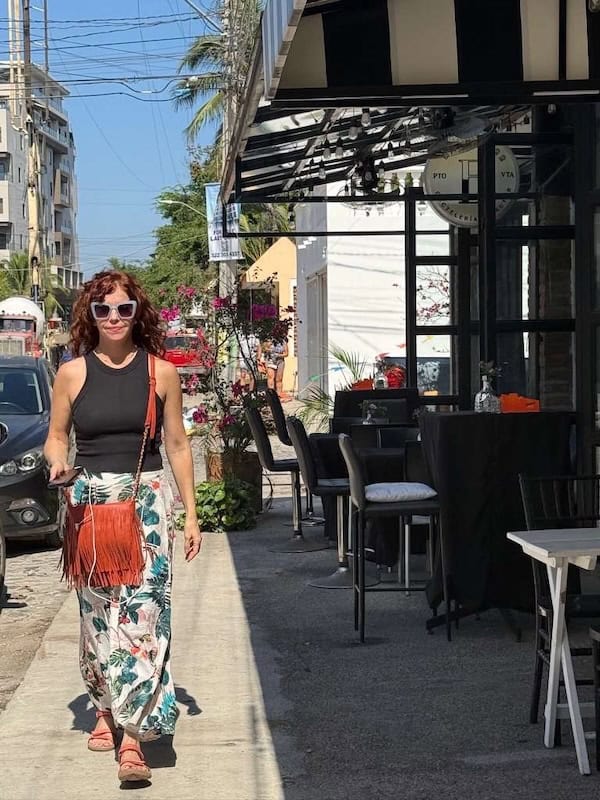
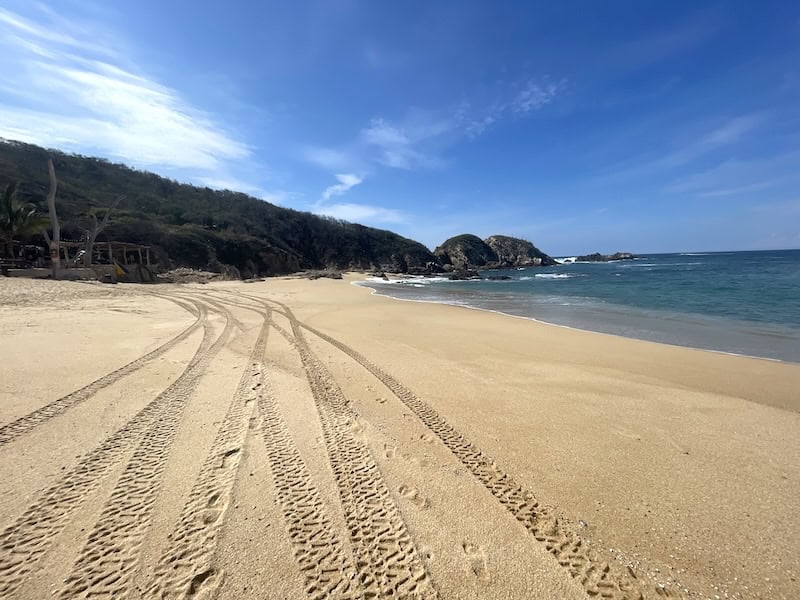
Zacatlán de las Manzanas and I didn’t exactly hit it off. It poured for five straight days, and the town was wrapped in a blanket of fog so thick I could barely see across the plaza. Not a blue sky in sight. Ever. But every so often, when the clouds parted, I caught a glimpse of a place so beautiful it made me want to see more.
I may not have had the trip I’d hoped, but I did get a real feel for small-town Mexico. And even with the rain, there’s still plenty to do, see, and taste here, from exploring otherworldly caves to (hopefully) seeing those sweeping mountain views everyone talks about. Spoiler alert… I did not.
Below is everything you need to know to plan a trip to Zacatlan, in Puebla.
Zaca-WHAT? Where is this place?
Zacatlan isn’t the easiest town to get to, which keeps it a bit off the beaten path.
It’s about 2.5–3 hours north of Puebla City, in the state of Puebla, tucked high in the Sierra Norte mountains. It’s about 3-4 hours northeast of Mexico City.
No matter where you fly into, you’ll need to drive some super curvy mountain roads to get there.
It’s one of Mexico’s Pueblos Mágicos, or “Magic Towns,” which basically means it’s got cultural charm, history, and a dash of fairy-tale appeal.
The town is known for its apple production (hence manzana, or apple, in the name). There are around 18 different types and hundreds of thousands of apple trees in the surrounding orchards.
The Feria de la Manzana (apple fair), held every August since 1941, is the year’s top event. Plan for rain and check the Great Fair of Manzanas de Zacatlan Facebook page for updates.
Map of Zacatlan de Manzanas
This map shows you where the town is compared to Puebla and Mexico City, as well as all my suggested places in this article.
The Vibe of Zacatlan
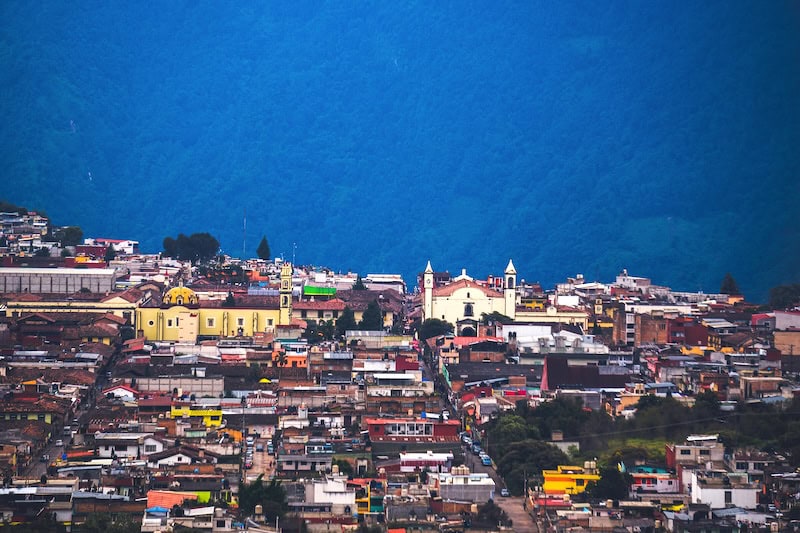
This little village in the misty hills of Puebla feels authentic in a way that many other Magical Towns don’t. It’s not curated for international tourists, so don’t expect English to be spoken.
At its heart, Zacatlán is compact and walkable, with cobblestone streets, colorful mosaic murals, and apple everything.
Of course, there is a lively zocalo (plaza); there always is in small Mexican towns. This main square has a giant flower clock, colonial buildings wrapped in mist, and bakeries perfuming the air with fresh apple pastries. It’s not flashy, but it’s charming, and it grew on me the longer I was there.
You’ll find two charming churches in the plaza. The Franciscan convent, which dates back to 1576, is the oldest in Puebla. Nearby, the Parroquia de San Pedro, dating from the mid-17th century, has a lovely neoclassical interior. Both are open to the public.
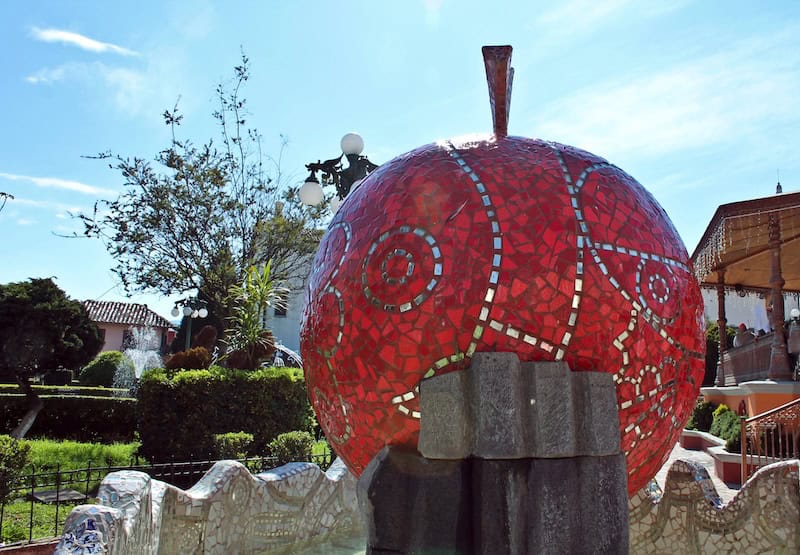
Wander around just outside the plaza, and you’ll find a larger-than-life mosaic apple, an alley full of incredible mosaics, and a clock museum.
Walk a few minutes away from the center, and you’ll be able to see the town’s red roof tiles and churches nestled into the mountains.
Fog or not, there’s plenty to keep you busy once you’ve wandered the plaza.
Things to do in Zacatlan
I was there for an ATMEX conference in October, so it wasn’t all play. I wish I had more time to uncover this Pueblo Magicos, well, magic.
But this is what I did do…
Spend the Day on a Blueberry Farm.
We went to the Frutos Del Bosque Hotel at Concordia Farms and spent the day making organic blueberry marmalade and tasting all sorts of blueberry goodness. We tried every form of the berry you could dream up, from chocolate-covered blueberries to blueberry wine and liquor.
You can also take a horseback ride around the area and feed their deer (blueberries, perhaps?).
Take a Pulque Tour at an Old Hacienda.
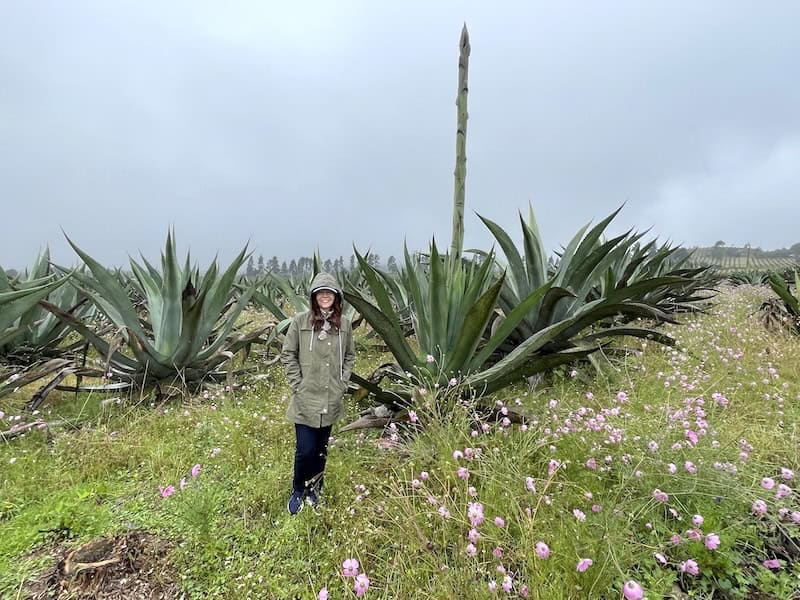
We spent a stormy day at Hacienda Amoltepec taking a pulque tour and cooking class. It’s a small boutique hotel with 13 rooms, centered around a courtyard, about 30 minutes from town.
Pulque is Mexico’s original party drink. It’s an ancient, slightly tangy booze made from fermented agave sap long before tequila or mezcal stole the spotlight.
On this pulque tour, you’ll walk around the maguey fields through the largest plants I’ve ever seen. I’m used to knee-high agave plants, but some of these were 15 feet high.
We drank the fermented, slightly foamy aguamiel sap from inside the heart of the maguey. At first, I was skeptical about trying the creamy, oozy-looking drink. It looked questionable—but so does half of Mexico’s best food.
It was slightly effervescent, a bit funky, and a little yeasty, which admittedly sounds horrifying. However, it tasted surprisingly good.
Then we took a distillery tour and headed into the kitchen for our cooking class and paired everything with different pulque drinks.
The tours are given in Spanish, but you might be able to ask for an English-speaking guide when you book.
A Cultural Day at a Local’s Home
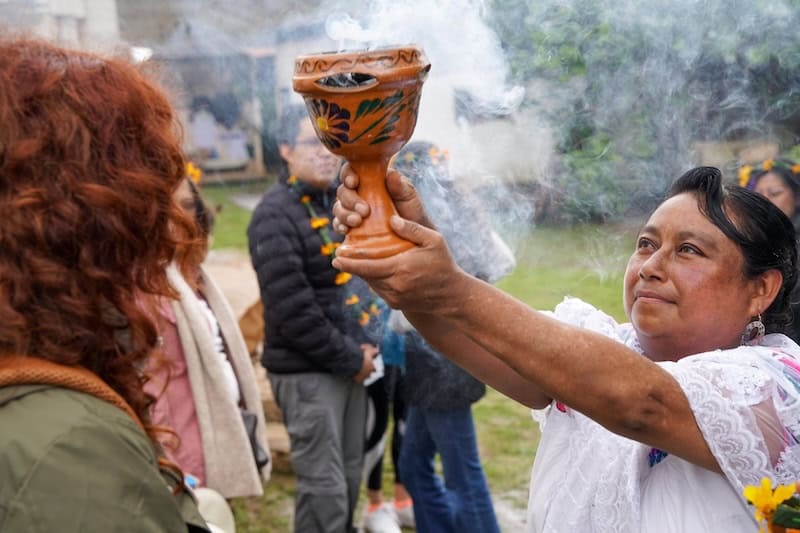
We had the chance to spend the day at the home of a local woman named Yoli. She is an incredible person who is deeply passionate about preserving indigenous traditions, so she opens her family home for people to learn about the culture and its connection to the earth.
We arrived to find her family giving us blessings in Nahuatl, Yoli’s native language. As they waved incense over us, they crowned us with marigolds. I didn’t understand what they were saying, but I was moved by it anyway.
Once in her backyard, we learned about the native foods of the region and tried making tortillas from scratch.
I’ve lived in Mexico for four years, and I’ve never tasted anything like what Yoli’s family prepared for us. Such unique dishes.
After feasting, we explored the art of weaving and its significance to the community.
The day ended with a traditional dance around a tall stalk of corn, and we received blessings with incense once again.
Day trips from Zacatlan
Grutas Karmides (Karmides Caves)
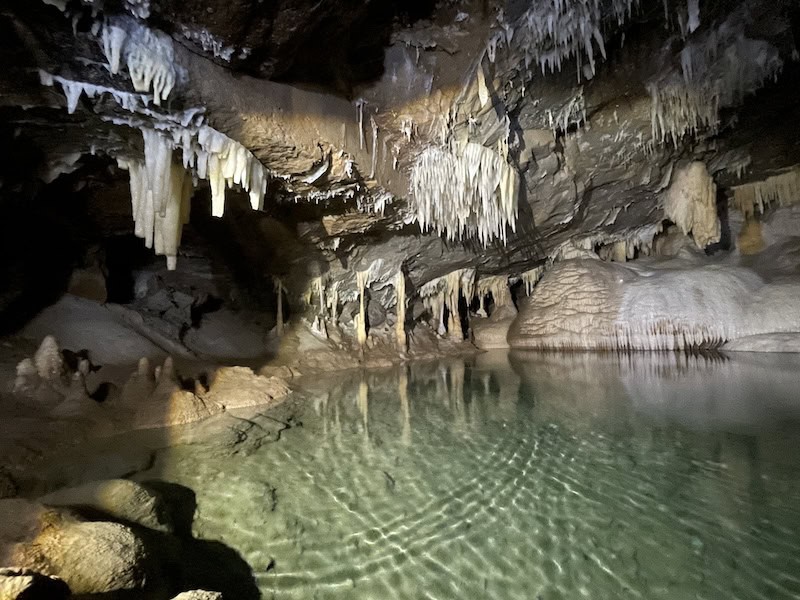
When the skies won’t stop dumping, you could go inside, but it’s even better to get underground in the Karmides Caves.
They are about a two-hour drive from Zacatlan in Zapotitlán de Méndez. And it’s worth the drive.
The caves were discovered by accident in 1919 by a man who owned a small liquor still. He was searching for fresh water and stumbled into the opening.
Literally, legend has it that he fell through the earth and into the cave.
You’ll start by walking knee-deep through a river into the caves. It’s super slippery. For the most part, you’ll be walking through water, so wear water shoes and clothes that dry quickly.
The caves are carved into limestone and are probably millions of years old. Your guide will carry flashlights, so you’ll be able to see all the stalactites, stalagmites and millions of mineral formations.
We spent about two hours touring the caves. Inside, there are nine different types of formations. Some even defy gravity. Instead of them dripping onto the cave floor, they resemble tiny fingers sticking out horizontally, like little nubs of limestone and crystals. Then, when the lights hit them, they light up like zillions of stars.
What I Would do in Zacatlan Next Time
When I learned that ATMEX was in Zacatlan, I did my research. For a small town, there are a surprising number of activities in and around the area. If you’re into anything that involves a helmet, harness, and screaming at the top of your lungs, this region has you covered.
If I hadn’t been one rainstorm away from building an ark, this is what I would do there:
- Mirador de Cristal: The glass viewpoint with jaw-dropping views over town (weather permitting).
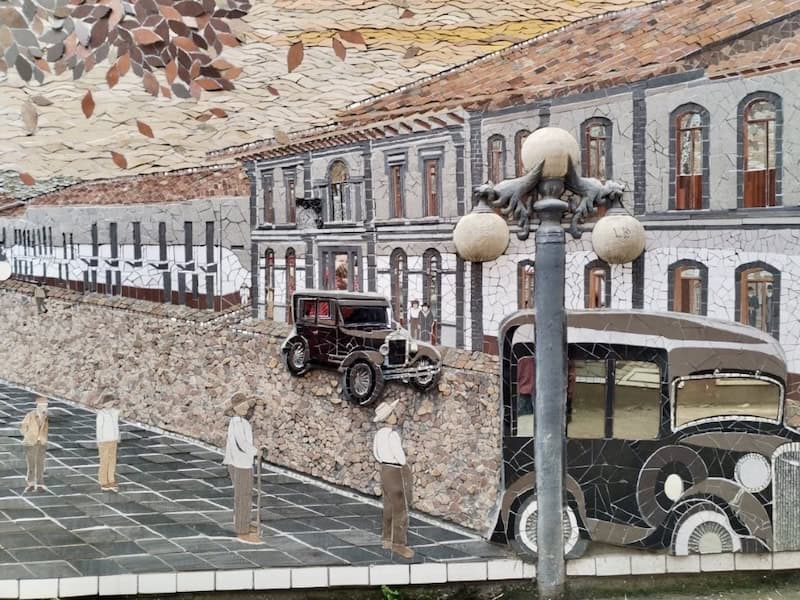
- Callejón del Hueso (Alley of Mosaics), also known as Zacatlan de mis reuerdos: An alley turned open-air art gallery. Every wall is covered in intricate mosaic murals made from shards of tile, glass, and mirror.
- Salto de Quetzalapan waterfall and adventure park: This 100-foot waterfall drops into a lush canyon surrounded by ziplines, hiking trails, and lookout points.
- Tuliman Waterfall: A full-blown eco-adventure park built around one of the highest waterfalls in Mexico, at 1000 feet!
- Museo del Reloj: A clock museum (the town’s famous for clock-making).
- Apple cider and pan de manzana tasting: Go cider tasting and bakery hopping.
- Valle de Piedras Encimadas (Piedras Magicas): Hidden deep in the forest and accessible only by 4×4, you can walk among the towering, oddly-balanced basalt rock formations dating back 65 million years.
If you want someone to plan any or all of these things for you, my friend and travel agent extraordinaire, Francisca Mercado, can make it happen. She lives in the region and owns Carácteres de Mexico, a travel agency.
Where to Eat and Drink in Zacatlan
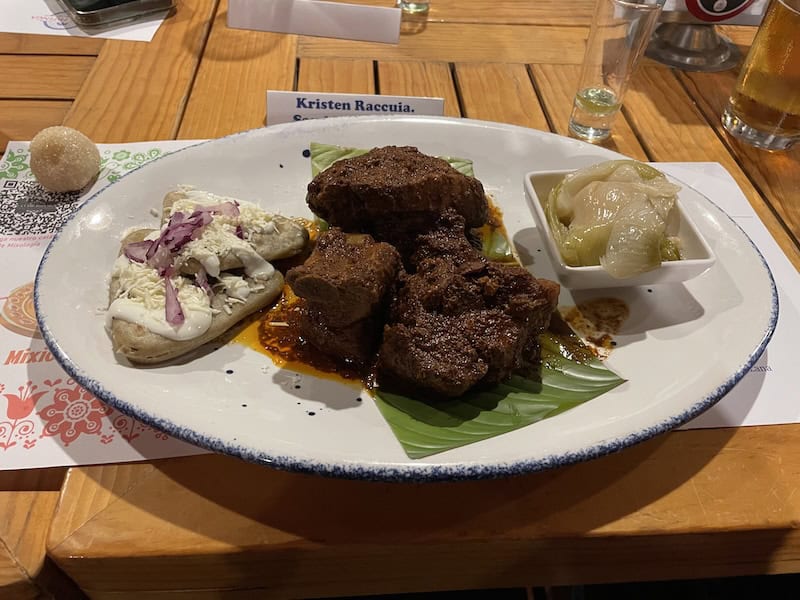
I didn’t have much time to explore the food scene there. But I had a few outstanding meals I still think about and drool over…
Agave: Best poblano soup I’ve ever had. Plus, they have loads of mezcal and pulque to try.
Casa Fernández: A hotspot right off the main zocalo with unique dishes like mole lasagna.
La Chichipinga: We had a bit of a tasting menu there, and the award-winning mole poblano and pork ribs blew me away.
Weather in Zacatlán: Bring the Rain Boots (and Maybe a Kayak)
Here’s the thing about Zacatlán: it’s gorgeous, but it’s also wet. The town sits high in the Sierra Norte mountains, and clouds roll in like they own the place, cause they do.
If you visit during the rainy season (June through October), expect misty mornings, drizzly afternoons, and daily downpours.
Pack rain gear and throw in one of those silly-looking ponchos that you think you’ll never use. Because let me tell you, all the people at the conference were buying them to wear over their rain gear.
You’ll thank me when your raincoat just isn’t enough.
I had an umbrella, a raincoat with a hood, and boots, which only dried when I got back to Puerto Vallarta. A poncho would have been smart. Plus, you can wear them over your backpack.
Locals barely notice the rain—it’s just another day in the mountains. They carry on, unfazed, wearing plastic ponchos, sipping hot coffee and apple cider, while the clouds roll in again.
On the upside, the rain gives the town its moody fairy-tale feel: cobblestones shine, and everything smells fresh and earthy. Just don’t expect to see sweeping views. Sometimes the fog is so thick, you’ll be lucky to spot the next block, let alone the mountains.
Temperatures hover between the mid-50s and low-70s°F most of the year. It’s perfect sweater weather. It’s not so perfect for drying them.
Best Time to Visit: January through May if you prefer sunshine over soggy shoes—rainy season here isn’t messing around.
Where to Stay in Zacatlan de Manzanas
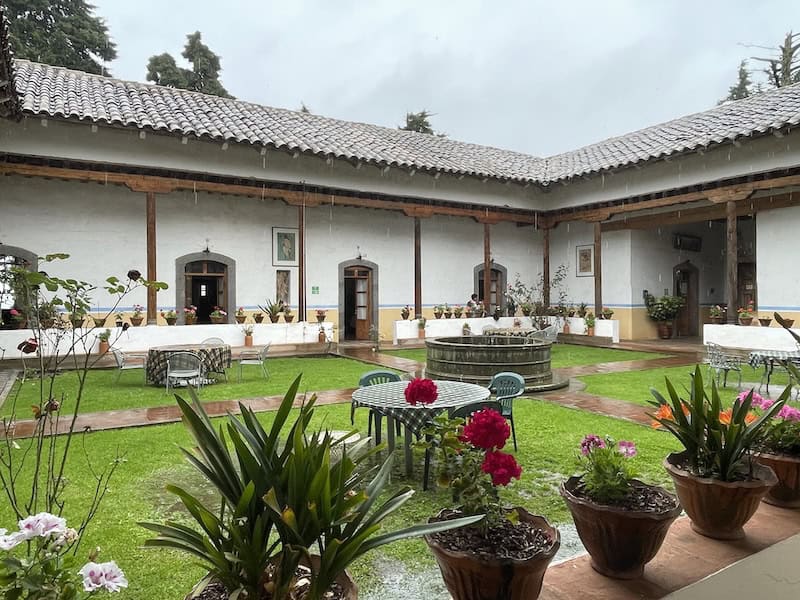
Since we were there for a conference, we stayed in several places.
You’ll find plenty of small hotels and cabinas around the town center. Just make sure yours has decent insulation and hot water—trust me on that.
Altavista Boutique Hotel is just outside of town on a hill with a breathtaking view and a delightful breakfast. They have an outdoor garden maze and a fire pit, where I would love to sit and watch the town light up at dusk. The rooms are all pretty large, with king beds and balconies for sunrise views.
For a budget option, we stayed at Hotel y Cabanas una Cosita de Zacatlan. The rooms were pretty rustic and cold. I had a large room with a fireplace, but I’m pretty sure it was vented incorrectly, so I never used it. Other people loved their rooms and made fires nightly. It’s about a 15-minute walk to town.
For a bit of a splurge, Casa San Miguel Hotel Boutique Y Spa is absolutely lovely. We went there for a temezcal experience at the spa and got a little tour around the hotel. It’s also right in the center of town.
I didn’t stay at Hotel Monumento Hacienda de Amoltepec, but we spent the day there during our pulque tour. It’s a bit of a hike on a washed-out road to get there, but if you want serenity and that old hacienda experience, this is it.
Getting There (and Getting Around)
Zacatlán may be charming, but it’s not exactly on the beaten path.
From Puebla City, it’s about a 2.5–3-hour drive, depending on traffic, road conditions, and how brave you are on mountain curves.
From Mexico City, plan for closer to four-ish hours.
The easiest way to get there is to drive yourself in a car rental. Otherwise, a bus will do the trick, albeit a longer one.
Once you’re there, your feet and local taxis are your best options.
Guided Tours of Zacatlan and Nearby Towns
There are a few different tours you can take to see the town. Some are day trips from Puebla, and others just focus on the town. The tours I’ve chosen here are all in English. Check out this nature and town tour, this walking tour, and this tour from Puebla.
Keeping in Touch
You have a few options when you come to Mexico. If you’re American and have T-Mobile or AT&T, that cell service works in Mexico… in most places.
To be sure you have internet while in smaller towns you can also buy an ESim before you get to Mexico. We use Airalo whenever and wherever we travel. They have quite a few different price options making it easy to find one right for your needs.
The last option is to buy a Mexican SIM, but that only makes sense if you’ll be here for a longer stay.
Is Zacatlan Safe?
Overall, I’d say yes. Zacatlán generally feels like a low-key, chill mountain village.
It’s always a good idea, no matter where you are in the world, to keep valuables out of sight, avoid sketchy areas at night, and stick to well-lit streets or trusted transport.
We walked around town at night and never felt unsafe. But if you’re staying out of town a bit, plan to use taxis (no Uber there).
Travel Insurance
Speaking of safety, travel insurance is just a smart choice these days. Especially if you plan to hike, zipline, jump in the waterfalls, ya know, have some fun. We don’t leave home without it. Especially since they won’t let you leave a Mexican hospital until your bill is paid… in full.
There are many options out there, but Safety Wing offers the most reasonable short-term options. For me, peace of mind = happy traveler.
Zacatlan: Worth the Visit?
Yes, is the answer.
If you want to see small-town Mexico, scratch your cultural curiosity, and get your blood pumping, then visiting here is a must. Tack 3-4 days onto the end of a trip to Puebla or Mexico City. It’ll show you a different side to Mexico than you are probably used to.
Something to know: Zacatlan is off the beaten path, so it doesn’t get much foreign tourism. Don’t expect people to speak English. Anticipate using your best translation app and being patient. The locals certainly will be with you.
If you aren’t into nature and cozy mountain towns, this place may not be for you.
So, tell me, is this the kind of place you’d like to visit? Let me know in the comments.
❣️,
K