
My first day in La Paz, Baja California Sur, Mexico, didn’t leave me planning a return trip.
But by the end of the week, I was trying to work out when we could go back.
Somewhere in the days between, this quiet Mexican city won me over. A bit inconvenient for my preconceived notions. I arrived fairly certain that a desert destination wasn’t my thing. I’m usually a lush-and-tropical kinda girl. Give me palm trees, jungle and an ocean and I’m happy. Brown mountains and cactus? That was going to be a hard sell.
But La Paz has more going for it than I expected.
So, what is La Paz really like? Here are nine things that surprised me.
Where is La Paz, Mexico:
La Paz is the capital of Baja California Sur, on the Sea of Cortez side of Mexico’s Baja Peninsula. About two hours north of Cabo San Lucas.
1. La Paz is a City, but it Doesn’t Feel Like One
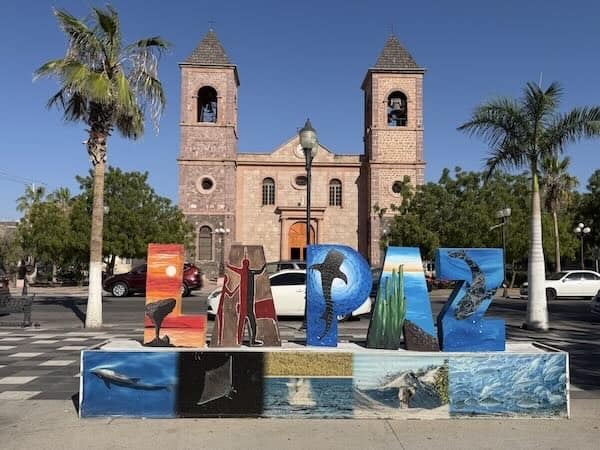
On paper, La Paz is a state capital with roughly 300,000 residents. In person? You’d never guess.
Downtown feels surprisingly small and low-key. Centro has no skyline to speak of. Buildings top out at two or three floors, and there’s no mega-resort anywhere near downtown. The streets are broad, level and laid out in an easy-to-navigate grid. A gift for someone like me, who can get lost going around the block.
Some afternoons it was so quiet we’d look at each other and ask, where did everybody go?
Bright murals cover some walls. Others are tagged with graffiti, and a fair number of storefronts sit empty. It isn’t polished, and I kind of love that. It’s a capital city first, there for its people, not to impress tourists, unlike many Mexican beach destinations. Tourism is its side gig.
2. I Fell for the Desert (Didn’t See That Coming)
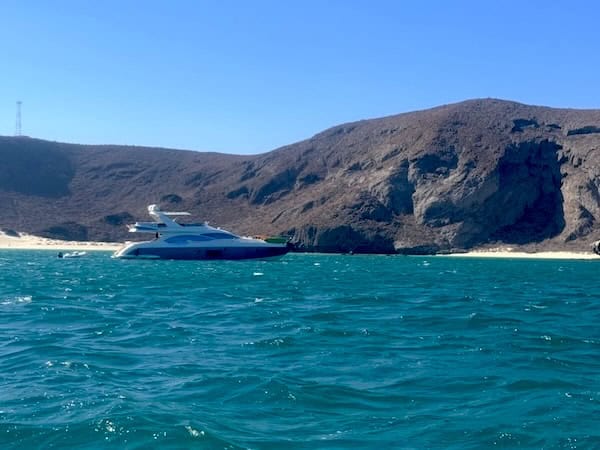
What surprised me was the contrast.
The barren mountains rise in layers of caramel, rust and chocolate brown. Their slopes are scattered with spiky green cacti. In places, enormous slabs of rock jut out at odd angles, giving it an almost lunar appearance.
And then there’s the Sea of Cortez.
Against all those earthy desert tones, the water looks almost impossibly blue. Pale aquamarine in the shallows, deepening to turquoise. It almost looks fake.
And unlike the tropical coastlines I’m used to, there’s no greenery to soften the edges.
I kept stopping to take photos. Jaw agape and repeating (very annoyingly) to Mark, “I just can’t believe how beautiful it is here.”
I wasn’t ready to call it love. But I definitely had a crush on that desert.
3. The La Paz Malecón has Two Very Different Personalities
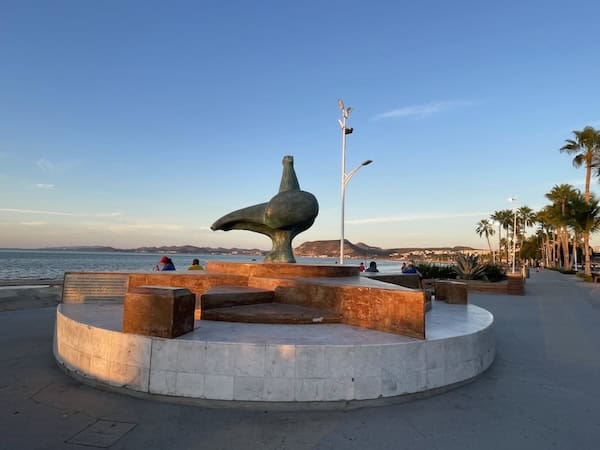
If you want to understand La Paz, spend some time on its malecón. This 3.5-mile waterfront promenade is where the city comes together.
Early mornings are wonderfully peaceful. The Sea of Cortez is often flat as a mirror. A handful of people are swimming or standing on paddleboards, taking advantage of the calm water. A few people are jogging and walking in the cooler air.
By midday, total ghost town. The sun is brutal, and everyone has the sense to disappear. Even the local lizards are hiding in the shade.
Then evening comes, everyone seems to emerge from wherever they’ve been hiding from the desert sun, and La Paz feels completely different.
Families come out for evening strolls, couples walk arm in arm, groups of teenagers gather at the skate park, and runners make their rounds.
The malecón isn’t just somewhere tourists go to snap sunset photos. It’s part of the local Paceños‘ lives.
My tip? Visit twice: once early in the morning and again around sunset. You’ll see two very different sides of La Paz.
4. La Paz is Sleepy Until You Know Where to Look

Our first couple of nights, we figured the city clocked out around eight.
The downtown streets were quiet. Restaurants weren’t exactly overflowing. We just assumed everyone went home after their evening stroll along the malecón.
Turns out, we weren’t looking in the right places.
Once we started poking around, we discovered a handful of cool bars and tucked-away hangouts that gave La Paz a little more personality after dark.
One of our favorites was Patio Dominguez. It looks like a little divey kinda place, but the drinks are good, the prices are right, and they have little snacks when you’re feeling peckish. Challenge someone to foosball, pool or Jenga (no Spanish necessary). Or wander out to the fairy-light-lit courtyard, where a DJ spins lounge music.
From the street, you’d never guess what was happening inside.
We also loved La Mechuda, a Spanish Vermouth bar. I had no idea vermouth bars were a thing, but it’s funky and quirky and totally works in La Paz. We tried the house vermouth with locally caught sardines on a bed of freshly grated tomatoes, served with hand-cut potato chips. Not exactly your typical Mexican bar snack, but delicious. We went back twice.
It’s easy to walk right past Mezcaleria La Miserable. But don’t. Inside, it’s a full-on agave shrine with more mezcals than we could count, and we recognized exactly none of them. So, we asked for a flight from different Mexican states and let the bartender school us.
After that, we stopped assuming a quiet street meant an early night. Quiet and boring aren’t the same thing.
5. Finding the Best Food Took More Work Than I Expected
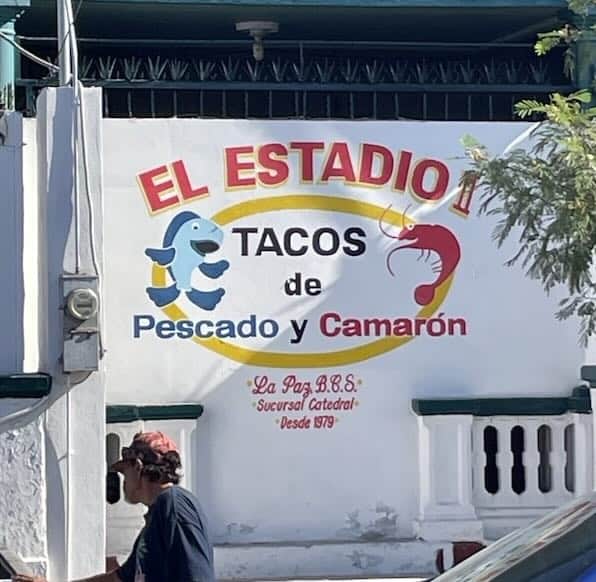
Here’s what I didn’t expect: struggling to find a good fish taco in Baja.
We kept asking expats for recommendations, and they kept sending us to Italian places. We tried a couple to be polite. Meh.
So, we went full taco detective. The rule is simple: look for a crowd of locals. That led us to Tacos El Estadio II, which was embarrassingly close to our Airbnb.
The fish tacos were everything I’d been craving. Light, flaky fish covered in a delicate batter, crunchy cabbage and a salsa bar loaded with toppings, some unidentifiable.
I copied the guy in front of me, added a little bit of everything, and did not regret it.
Before moving to Malaysia, I would never have waited in line for food, but that is really the best way to find the good stuff. If the line is made up of locals, join them. You also might just make a new friend. Food trumps any language barrier.
6. Wildlife isn’t an Attraction Here. It’s Part of the Place.
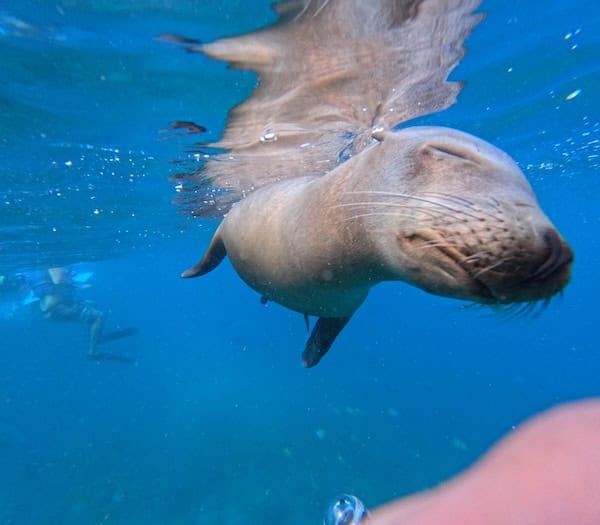
What is La Paz, Mexico, known for? Marine life is a big part of the answer. But I wasn’t prepared for just how much wildlife we’d encounter in a single week.
We saw dolphins, groups of rays and blue-footed boobies. We also spotted an owl one evening while walking along the malecón.
We swam with sea lions, just a few miles offshore in San Rafaelito. Well, it’s more like they swam with us. We stayed the appropriate distance away from them (their 500 lb. dad was side-eying us), but the little curious guys swam right into our camera. Yep, we got booped by a baby sea lion, and I couldn’t have been happier.
And we still hadn’t seen one of the area’s biggest stars: the whale shark.
We arrived just a few days too early for whale shark season. Well, technically, we weren’t early. They were late. But who am I to argue with the largest fish in the world? Missing them stung, but La Paz had already overdelivered.
If there’s a particular animal you’re hoping to see, plan your dates around it. Here’s a rough wildlife calendar for La Paz and the wider Baja California Sur region.
| Wildlife: | Best time to see them: | Where: |
|---|---|---|
| Whale sharks | November–April* | La Paz Bay |
| Mobula rays | May–July | Sea of Cortez |
| Humpback whales | December–April | Southern Baja waters |
| Blue whales | February–April | Loreto |
| Gray whales | January–March | Magdalena Bay and Pacific lagoons |
| Sea lions | Year-round** | San Rafaelito and Los Islotes (La Paz) |
| Dolphins | Year-round | Sea of Cortez |
*Whale shark sightings and authorized tour dates depend on their arrival and official permits. The government must record at least 7 whales before the tours can start.
**Sea lion colonies are there year-round, but swimming restrictions apply during the summer breeding season.
And the mobula ray migration? I was so determined to see them that we returned to La Paz in sweltering June. And yes, we saw them in the hundreds! But that’s a story for another article.
7. Balandra Beach has Competition
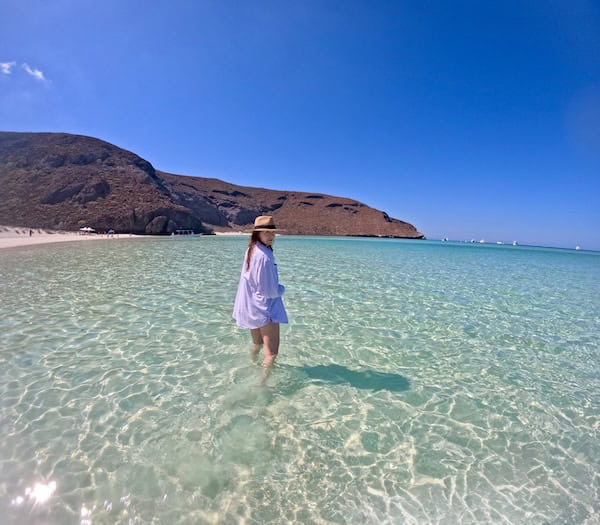
Before visiting La Paz, I’d seen countless photos of Balandra Beach. You’ve probably seen Balandra even if you don’t know its name. It’s the beach in every La Paz photo: pale, shallow water that goes on forever and sand so white it almost glows.
It absolutely lives up to the hype. But it has competition.
The real surprise was how many coves nearby look just as good and get a fraction of the visitors.
During our sea lion boat trip, we cruised past Balandra before heading to a secluded cove that was every bit as gorgeous, minus the crowds. Only one other boat was there when we arrived.
We grabbed our paddleboards and headed across water so shallow we eventually had to hop off and walk them. Beneath the surface, the white sand was clearly visible, and long, pencil-thin trumpetfish cruised beneath us.
As we paddled into a narrow mangrove channel, the scenery changed completely. Tangled roots disappeared into the water, little fish broke the surface, birds chattered away from the branches overhead, and somewhere deep in the tangle, frogs croaked their little hearts out.
In less than ten minutes, we’d gone from a white-sand beach to a mangrove tunnel to a desert mountain backdrop. Three postcards, one paddleboard.
And when we returned to shore, homemade ceviche, freshly prepared guacamole and tostadas were waiting for us, courtesy of our guide Yosef’s mom.
If you decide to drive to Balandra, know that daily visitor numbers are capped and entry runs in two different time slots. Whether you choose the early-morning session or the later afternoon one, get there early. We saw a ton of cars lined up, waiting to enter.
Some of the prettiest beaches around La Paz have no name, no road and no crowd. I’d swap a return trip to Balandra for another day of cove-hopping in a heartbeat.
8. La Paz is Nothing Like Cabo
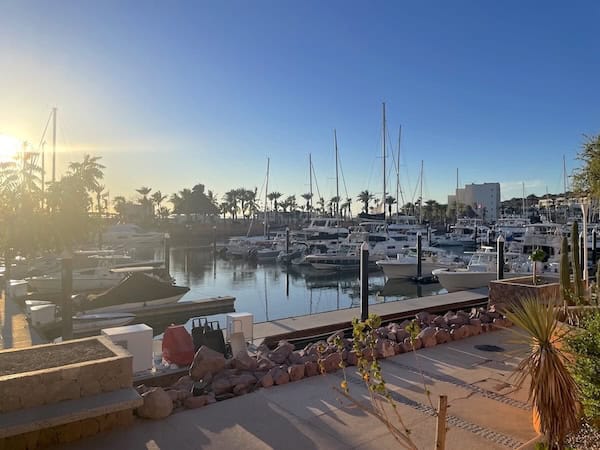
Considering La Paz is only about two hours from Los Cabos, I expected the two destinations to have more in common. They’re both on the Baja Peninsula, surrounded by desert, mountains and beautiful beaches.
That’s pretty much where the similarities end.
Cabo is all about the vacation experience. Think sprawling resorts, beach clubs, infinity pools and nightlife that doesn’t quit. La Paz, on the other hand, is a working Mexican city that happens to have some of the most spectacular beaches and marine life I’ve ever encountered.
In La Paz, there aren’t rows of all-inclusive resorts lining the waterfront or promoters trying to lure you into the next happy hour.
And while Cabo certainly has its share of natural beauty, La Paz is not packaged for tourists. It’s not trying to entertain you every minute of the day.
If you’re after a luxury resort, poolside cocktails and a lively party scene, Cabo is probably your place.
But if you’d rather spend your days exploring wild beaches, getting out on the water and experiencing everyday Mexican life, La Paz might surprise you as much as it surprised me.
9. I Left La Paz Wanting More
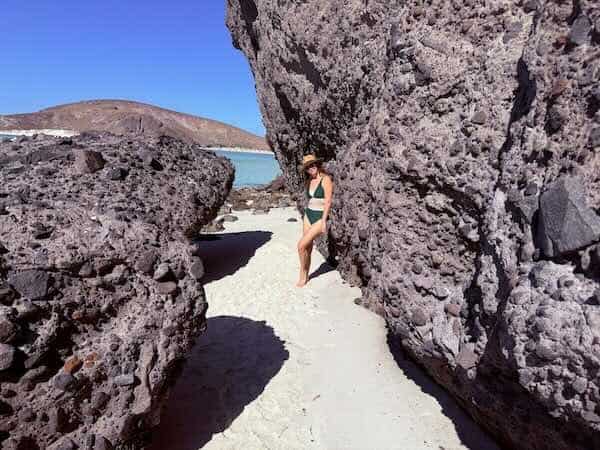
Here’s the thing about La Paz. It didn’t knock my socks off the moment I arrived. There was no grand entrance, no instant love affair. In fact, I spent the first day wondering what all the fuss was about. But the longer I stayed, the more I liked it
Somewhere between swimming with sea lions, wandering the quiet downtown streets, and paddleboarding through mangroves, that little desert crush turned into a second date.
I went to La Paz expecting to write a few stories. I didn’t expect the city to give me so many reasons to come back.
La Paz, Baja California Sur: Frequently Asked Questions
Is La Paz, Mexico, Safe
Some of downtown’s empty buildings and dimly lit streets made me hesitant at first. But all the older women I interviewed who lived there told me they felt comfortable walking around, including at night.
Their experiences were reassuring, but use your common sense as you would anywhere else in the world. Stick to well-lit streets after dark, keep an eye on your belongings, and take a ride if a walk feels uncomfortable.
When Is the Best Time to Visit La Paz, Mexico?
The weather in La Paz, Mexico, makes November through April a more comfortable choice for exploring on foot. Summer gets seriously hot, so plan walks early and save the afternoon for shade or air conditioning.
But if wildlife is your priority, let that guide your dates (see the table above). Whale shark tours generally run during the cooler months, subject to arrivals and official authorization. We returned in June specifically for the mobula rays. It was sweltering, but seeing hundreds of them made me temporarily forget that I was melting.
How Many Days Do You Need in La Paz?
I’d give La Paz at least four or five days, especially if you want a boat excursion or two without rushing through town. That gives you time for wildlife, beaches, and discovering what’s behind those unassuming bar entrances.
We spent 10 days on our first visit, 5 nights on the second trip, and I didn’t run out of things I wanted to do. Leave a little breathing room in your itinerary, too. We planned all our boat trips on the first day, so if the wind or sea conditions changed our plans, we could try again another day.
Have you been to La Paz? Tell me in the comments what surprised you. Or what’s making you curious about going.



Wow I had no idea any of this even existed! Thanks for making us feel like we were there with you!
It’s such a great place to explore. Now you’ll have more reasons to come back to Mexico, Michael!