
When I first put this list together back in 2021, digital nomad visas were still a pretty new concept. Only a handful of countries were testing visa programs that allowed remote workers to live abroad legally as long as they were working online.
Now, in 2026, things look very different. A lot more countries have jumped on board, offering digital nomad visas, remote worker visas, or other types of residency options for people who work online.
I’ve been living abroad since 2013 and have gone through the residency process in a few different countries, including Mexico, where I am now. One thing I know is that every country does things a bit differently. The rules, income requirements, and application steps can vary a lot.
Some visas are built specifically for remote workers, while others are general residency programs that digital nomads tend to use.
I’ve updated this guide for 2026 to reflect what’s available now. It covers some of the best digital nomad and remote worker visa options out there, along with the basics on requirements, costs, and how to get started.

Before You Go: Don’t Forget:
1. Your Phone Plan
One thing that doesn’t get talked about enough when moving abroad is staying connected when you land. Having data on your phone from day one makes life a lot easier.
I use an eSIM when I travel because I can activate it before I leave home and have data as soon as I land. No hunting for a local SIM card, no language barriers, and no surprise roaming charges.
If your phone supports eSIMs, it’s the best way to go.
2. A VPN
If you’re working from cafés, airports, hotels, or shared Wi-Fi networks, a VPN is one of the easiest ways to protect your personal info and stay secure.
I use NordVPN whenever I’m traveling or working on public Wi-Fi. It’s also handy when I’m trying to watch a show on my American Netflix account that’s restricted.
3. A Mail Forwarding Service
We use Anytime Mailbox and have for years. But some people I know prefer Traveling Mailbox. After doing all my research to find what would be best for us, I wrote a detailed blog post about several mailbox services: Best Mail Forwarding Service: How to Get Your Mail While You’re Living on the Moon.
That should help you find your best option because it’s not your mom.
Why not just stick to tourist visas?
Tourist visas are short-term and not continuously renewable.
While technically, you are not supposed to work on a tourist visa, it’s quite a gray area. If you’re working online and not taking a job from a local, the authorities may not bother with you.
But what happens when you want to stay longer? You have to try your luck with a visa run and hope the immigration officer doesn’t care.
That’s where the digital nomad, freelancer, or remote work visas come in. They are making it simple and bringing much-needed revenue into these countries without jeopardizing job opportunities for their citizens.
What’s the Difference between remote workers and digital nomads?
They are close but not the same.
Remote workers don’t work in an office, but they don’t necessarily travel and work simultaneously.
Whereas digital nomads have jobs that offer the freedom to travel and work from any location. It’s a fine line, but the line is there.
Travel Insurance for Digital Nomads
Many digital nomad and remote worker visas require proof of health insurance, so it’s worth sorting this out before you apply.
If you’re looking for a budget-friendly option, SafetyWing is popular with digital nomads and offers flexible monthly coverage. Just be aware that coverage limits are generally lower than some traditional travel insurance plans.
Personally, I use IMG. They offer a wide range of plans, including annual policies with higher coverage limits that can be surprisingly affordable if you travel full-time.
Whichever provider you choose, make sure the policy meets the specific insurance requirements of the country you’re applying to.
Remote Work Visa for Barbados
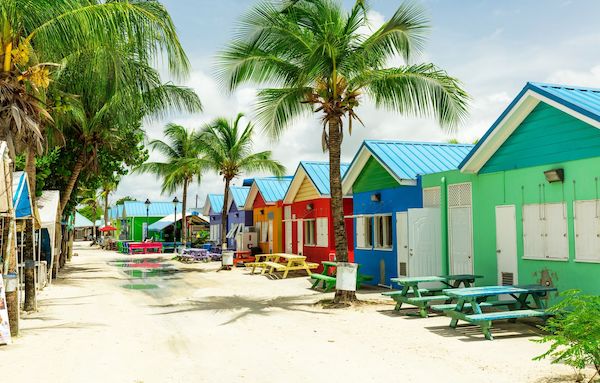
The Barbados Welcome Stamp program allows digital nomads and remote workers to stay for 12 months. The visa can be renewed if you fall in love with the island. And how could you not?
Basic Requirements:
- You’re a remote worker for a company outside of Barbados, or you own a location-independent business.
- You must make over $50,000 per year.
How to apply:
- Fill out the application form online.
- Provide a valid passport that has a biodata page.
- Provide proof of relationship with family members who are coming with you.
Costs:
- Solo cowboys and girls pay $2000.
- Families pay $3000 for the family bundle fee.
Costa Rica Digital Nomad Visas

Costa Rica is already very popular with expats and digital nomads looking for some nature with a side of luxury for less. It’s long been one of the best countries with a remote work visa.
If island living doesn’t excite you but diverse nature, beaches and surfing still do, Costa Rica might be your spot.
The Digital Nomad Visa is designed for freelancers or digital nomads and allows you up to two years in the country.
Basic Requirements:
- You work remotely for a company or clients based outside Costa Rica, or own a location-independent business.
- Minimum income of $3,000/month (individual) or $4,000/month (with dependents).
- Proof of employment or business ownership.
- Valid health insurance for the duration of your stay.
- Clean criminal background check.
How to apply:
- You can apply by registering on Costa Rica’s Immigration Website. However, it’s recommended that you hire an immigration lawyer to take care of all the paperwork.
- All necessary documentation needs to be translated into Spanish and authenticated in your home country.
Costs:
- The registration fee is $100.
Croatia Digital Nomad Visa
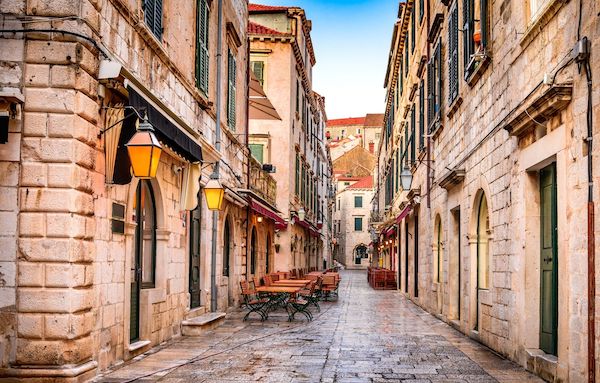
If historical cities, stunning nature, and magnificent islands are your thing, check out Croatia. Croatia’s digital nomad visa allows you to stay up to 18 months.
Basic conditions:
- Proof you’re self-employed or can work remotely (things like a written statement, employee contracts or client contracts will do).
- It’s necessary to make a minimum of €3,622.50/$3,912 per month or show sufficient savings to support yourself for the duration of your stay. These numbers change annually, so be sure to check.
- Have €43,470 ($49,479)in savings to cover your expenses for 12 months.
- Have €65,205 ($74,219) savings to cover your expenses for 18 months.
- Pass a criminal background check in your home country.
- Have proof of accommodation – a rental agreement.
- You’ll need proof of health or travel insurance for the duration of your stay.
How to apply:
- Obtain a personal identification number (OIB).
- Download and complete the online application form.
- Two passport-size photos.
Costs:
- The fees currently range between €100 and €200 (~$108–$216), depending on where and how you apply.
Remote Work Visa in Dubai
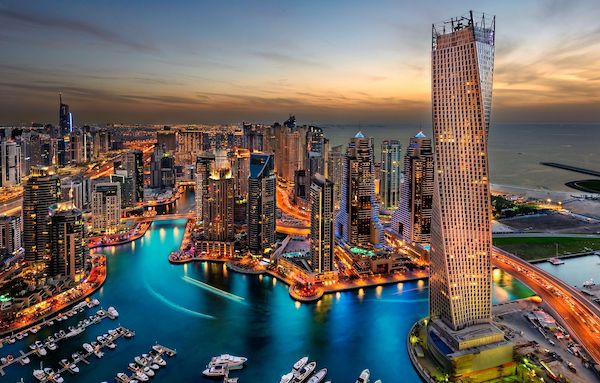
Dubai is a playground for the wealthy. You can go ice skating and beach hopping on the same day. It does have a high cost of living, which may prohibit some remote workers, but it’s worth looking into if you can afford it.
Dubai has a one-year virtual working program visa that is aimed at remote workers and business owners. You can take your whole family there and live income tax-free. If you’re American, you’ll have to pay taxes anyway, but you won’t be taxed in Dubai.
You’ll be granted access to all the residency benefits like schools, utilities, and telecoms.
Basic Requirements:
- Provide proof of employment and a contract for at least a year.
OR
- Proof of ownership of a company.
- Earn a minimum of $3,500 monthly.
- Employees must provide recent payslips and bank statements. Business owners must provide proof of company ownership and income.
- You must have health insurance with UAE coverage.
How to apply:
- Complete the application form.
- Provide all the compulsory documentation.
Costs:
- Approximately US$287–350, depending on application method and additional processing fees.
Estonia Remote Worker Visa

Spend your off-time discovering a lesser-known European gem. From its UNESCO sites and medieval architecture to its old-growth forests and diverse terrain, Estonia has something for everyone.
In June of 2020, Estonia created its digital nomad and remote work visa program. It allows foreign nationals to live there for up to a year, and most applications are reviewed within one month.
Basic Requirements:
- You work remotely for a company not based in Estonia or own a location-independent business.
- Proof of monthly earnings of at least €4,500/month for the last 6-months.
- Valid health insurance.
- Proof of remote work arrangement.
How to apply:
- Fill out the application form.
- Schedule an appointment at your nearest Estonian Embassy or Consulate because you need to submit your forms in person.
Costs:
- Type D visas cost €120.
Georgia Remote Work Visa

Known for its low cost of living, stunning scenery and cobblestone old towns, Georgia is an up-and-coming hotspot for a lot of digital nomads.
It does not currently have a dedicated digital nomad visa in the same way that Costa Rica, Spain, Portugal, or Estonia do. However, citizens of many countries (including Americans, Canadians, Brits, Australians, and the EU ) get visa-free entry and can stay for up to a year. Most remote workers just take advantage of this policy.
Basic requirements:
- Hold a passport from an eligible country.
- Meet Georgia’s entry requirements.
How to apply:
- There is no application process.
Costs:
- It’s free.
Digital Nomad Visas in Germany

Germany doesn’t offer a dedicated digital nomad visa. However, freelancers and self-employed professionals can apply for a Freelance Visa (Freiberufler), which can be granted for up to three years and can be renewed. It’s not open to every type of freelancer. A few examples include artists, writers, language teachers, interpreters or architects.
Fair warning: it can take several months to be approved and the process is mostly in German, so hiring an immigration lawyer is strongly recommended.
Basic requirements:
- You need a German address; a rental is fine.
- You must provide proof of health insurance throughout your stay.
- Proof of financial self-sustainability through things like bank statements or employee contracts. No exact income amount is given.
How to apply:
- Get all the documents needed.
- Obtain a residence in Germany (a rental is fine, but you’ll need to give the address to the powers that be).
- Schedule an appointment with the immigration office to go over your visa.
- All documents must be in German or with certified translations.
Costs:
- The visa fee is €75
Iceland Remote Work Visa

You may have never thought about living in Iceland, but if you’re not a weather wimp like me and love dramatic landscapes, Iceland may be for you. And they have a long-term visa program for remote workers and digital nomads that allows you to stay for up to 180 days. The catch? You need a pretty hefty monthly amount of income to make it work.
Basic Requirements:
- You must be from a country outside the EU/EEA/EFTA You must be visa-exempt to enter the Schengen area.
- You must own a remote business or work remotely for a company based outside of Iceland.
- Provide proof of your self-employment or employment.
- You’ll need to show a minimum monthly income of 1,000,000 Icelandic Krona ($8130) for a single person. For a couple, it’s 1,300,000 ISK ($10,570).
- Provide proof of health insurance that covers Iceland.
How to apply:
- Complete the application form.
- Submit all the required legal documents.
Costs:
- Processing fee: ISK 12,200 (~$87)
Mexico Temporary Resident Visa

When I originally wrote this post, I was still living in Malaysia. Clearly, things have changed as I now live in Puerto Vallarta, Mexico.
Mexico’s beautiful beaches, friendly people and colorful towns have made it a haven for travelers and digital nomads.
Mexico has an unusually long tourist visa for some passport holders. Americans get six months on entry.
There is no clear-cut Digital Nomad Visa in Mexico. But many remote workers use the Temporary Resident Visa, which is designed for anyone who wants to live in Mexico for more than 180 days and up to 4 years. It’s based on economic solvency, not remote work. After 4 years, you can switch it to a Permanent Residency Visa.
Fair warning, you need to start the process in your home country. And in the US, each consulate has different requirements. It’s quite confusing. We did it in Chicago, but you don’t have to do it in the consulate of your home state. Requirements can vary slightly between consulates, so it’s worth checking several before booking your appointment.
We did it ourselves. However, the portion in Mexico nearly broke me. Unless you speak Spanish, I definitely recommend a facilitator for peace of mind. They are worth the money and save you time.
Basic Requirements:
- Proof of economic solvency — requirements vary by consulate and update regularly as they’re calculated in Mexican pesos. As of writing this, the amount is approximately $4,400 per month over the previous six months.
- Alternatively, you can qualify through savings or investments of roughly $74,000 USD or more maintained over the previous 12 months.
How to apply:
- Complete the application form.
- Prepare the required documentation.
- Schedule an appointment with a Mexican Embassy or Consulate.
Costs:
- Consular visa fees are typically around $55.
- After arriving in Mexico, you’ll pay additional residency card fees that vary depending on the length of residency granted.
Portugal Digital Nomad Visas

Living in Portugal has long been a fan fave for expats and digital nomads. People are flocking there for its temperate climate, incredible cities, and a low cost of living (by European standards).
Portugal D7 Visa (Passive Income)
The D7 is Portugal’s passive income visa and a solid option if your income comes from pensions, rental income, dividends, or royalties rather than active remote work. It’s a great fit for retirees who want a European base with a path to permanent residency after five years.
- Initial entry visa is valid for 4 months, converts to a 2-year residence permit, renewable for 3 years at a time.
- Minimum income: €870/month (~$990).
- Savings required: €10,440 (~$11,875).
- Proof of accommodation, valid health insurance, and a clean criminal record are required.
Portugal D8 Visa (Digital Nomad)
Launched in 2022, the D8 is Portugal’s dedicated visa for remote workers and freelancers. It’s become one of the most popular in Europe for good reason — it’s a clear path to permanent residency after five years.
- Initial entry visa is valid for 4 months, converts to a 2-year residence permit, renewable for 3 years at a time.
- Minimum income: approximately €3,500–€3,700 per month/ (~$3,981-$4,208).
- Savings required: €11,040 (~$11,923).
- Long-term residency health insurance required (travel insurance not accepted).
- Clean criminal record required.
Important to notes:
- Portugal closed the traditional NHR program to most new applicants in 2024, though a new, more limited tax incentive program exists for certain highly qualified professions.
- And a heads up on timing: AIMA (Portugal’s immigration agency) is currently running a significant backlog, so budget 6–9 months for the full process.
How to apply:
- Collect the necessary docs.
- Schedule an appointment at a Portuguese Embassy or Consulate.
- Provide the application in person.
- More info at aima.gov.pt
Costs:
- Visa fee: €110 (~$119), plus ~€40–41 (~$43) if applying via VFS Global.
- Residence permit fee: €160–170 (~$173–184) via AIMA.
Digital Nomad Visas in Spain

Spain now has two solid options: the Non-Lucrative Visa for retirees and self-sufficient types, and a dedicated Digital Nomad Visa launched in 2023 for remote workers.
Spain’s Non-Lucrative Visa
The Non-Lucrative Visa is for up to one year and is geared towards retired and monetarily self-sufficient people. So technically, you aren’t allowed to work with this visa. Still, that’s a bit of a gray area .
Basic requirements:
- Minimum income of €2,400/month (~US$2,780) or €28,800 (~US$33,350) in the bank.
- Spanish health insurance
- Police background check from your home country
- Medical Certificate of Good Health
How to apply:
- You need to apply in person at a Spanish Embassy or Consulate.
- All the documents must be translated into Spanish by a registered translator and authenticated in your passport country.
- You are required to sign a statement that you will not work while living in Spain, so if you plan to work, get legal advice before your application.
Costs:
The visa application fee is around $140
Spain’s Digital Nomad Visa
Launched in 2023, this is Spain’s dedicated visa for remote workers and freelancers earning income from outside Spain.
If you apply from within Spain, you’ll receive a three-year residence permit, and time spent on the visa counts toward permanent residency after five years.
Eligible applicants may apply for Spain’s special expatriate tax regime, often called the Beckham Law, which can reduce taxes on certain employment income.
Basic requirements:
- Minimum income of approximately €2,760/month (~US$3,200) for a single applicant.
- Must work remotely for a company or clients based outside Spain.
- Foreign clients or employers must generally account for at least 80% of your income.
- University degree or at least 3 years of professional experience required.
- You will need Spanish health insurance.
- You will need to provide a police background check from your home country.
How to apply:
- Apply at a Spanish Embassy or Consulate, or from within Spain through the UGE-CE.
- Documents generally need to be authenticated and translated into Spanish.
Costs:
- Visa fee: €73–140 (~$83–172) depending on application route.
More Countries Offering Digital Nomad Visas
This list has grown a lot since I originally wrote this post.
- Indonesia has a Second Home Visa Program. It’s valid for 5-10 years but requires proof of approximately IDR 2 billion (~US$122,000) in funds. Fair warning: Indonesia cracked down big time on foreigners working on tourist visas in Bali in 2026, so get the right visa if you plan to work. More info.
- Thailand has all sorts of long-stay visas with various age restrictions and monetary requirements. But there is a dedicated digital nomad visa. The DTV is a 5-year multiple-entry visa that allows you to stay for up to 180 days at a time. You can extend each entry once by an additional 180 days at a local immigration office.
- Greece‘s Digital Nomad Visa is valid for one year, provided you have a minimum income of €3,500/month (~$3,780) and work outside of Greece. After the first year, you can apply for a two‑year renewable residency permit.
- Romania requires applicants to earn at least 3 times the average gross monthly salary. The exact amount is updated annually, so check the current figure at mae.ro before applying. One-year visa, renewable up to 3 years total.
One More Thing: How You’ll Access Your Money
I’ve lived in Malaysia, South Africa, Brazil, the UK, and now Mexico. I’ve probably withdrawn cash from more foreign ATMs than most finance bloggers.
One of the questions I get asked most often is how to access money while living abroad.
Personally, I keep it simple. I use a fee-free ATM card and withdraw local currency as needed. We swear by Charles Schwab because they reimburse ATM fees worldwide, while some Chase accounts also offer international-friendly banking options.
Before you go, make sure you understand foreign transaction fees, ATM fees, and currency conversion charges before you leave. Those little fees can add up quickly if you’re living abroad long-term.
The Wrap Up
The best digital nomad visa isn’t necessarily the one with the lowest income requirement or the longest stay. It’s the one that fits the life you actually want to live. We canceled our Malaysia visa because we decided it wasn’t right for us anymore.
We love having a path to permanent residency as we do in Mexico. But that’s not important for everyone. You might just want tropical weather and a lower cost of living, or the flexibility to move around. The good news is that there are more legal options for remote workers than ever before.
I’ve been living abroad since 2013, and I know that moving overseas is rarely as complicated as people imagine. The hardest part is usually deciding where to go.
*All info is correct at the time of publishing. However, things change. Red tape changes. Don’t take what I’ve written here as gospel. It’s not. Do your research. Also, everything is in USD unless otherwise noted. Dollar amounts are subject to exchange rates. So do your due diligence and check all facts before you book that flight.



Wow, great research! I just had a guest through the couchsurfing platform, she’s a journalist specializing in animal rehabilitation and is travelling the world working at these sites and writing about them. I’m going to forward this article to her!
As you say at the end, here in Thailand they’re considering a digital nomad visa. It seems to have quite high financial requirements though. Some information here: https://thethaiger.com/news/national/thailand-proposes-digital-nomad-visa-among-others-to-benefit-expats-economy
Hi Michael,
Thank you. And thanks for the link, it’ll be interesting to see what comes of it. But there are other places with a lower earning requirement for sure.